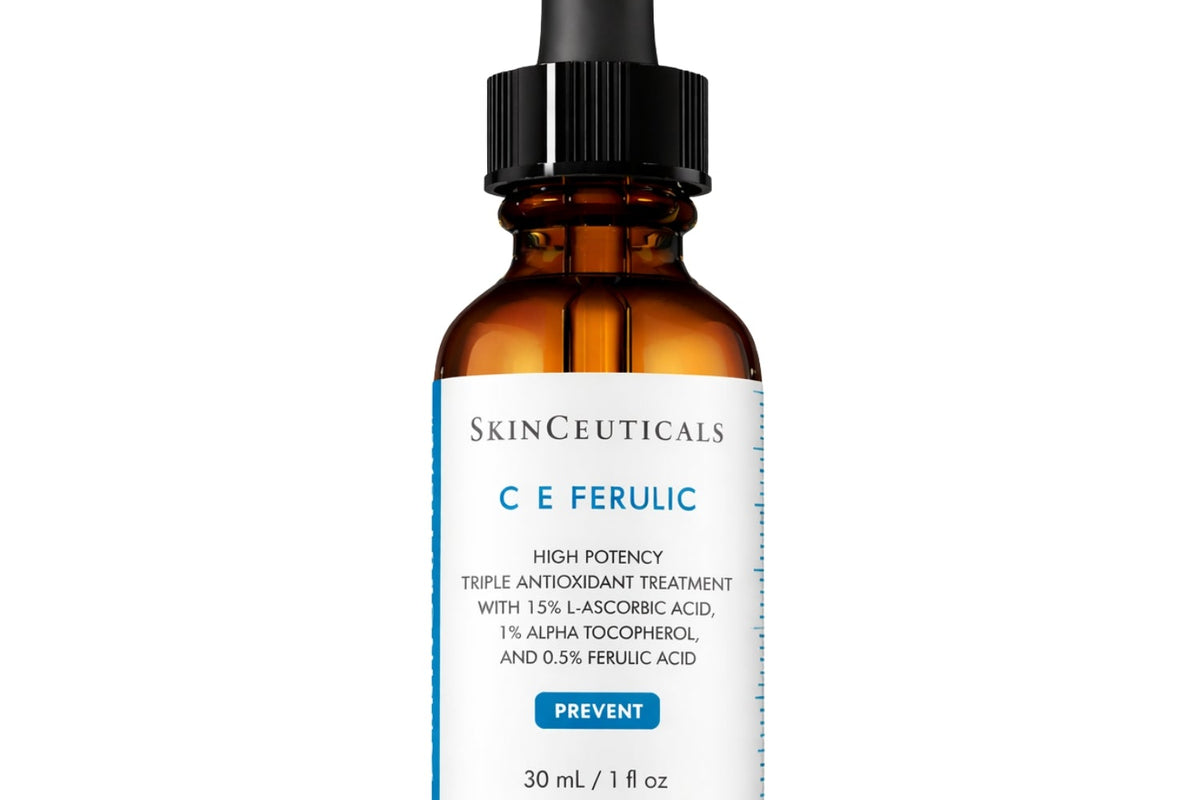


The heating clicks on before you've admitted summer is over. Your skin knew before you did. That tightness by mid afternoon, the dullness under your makeup, the sudden urge to reach for a heavier moisturiser: that's your autumn skincare routine announcing itself, whether you'd planned for it or not. The fix isn't a full teardown. It's an edit. More barrier support, retinal back from its summer holiday, vitamin C working harder than ever, and SPF exactly where it's always been. Here's the reset, led by the serum topping our bestseller list this season: SkinCeuticals C E Ferulic.
Why skin changes when summer turns to autumn
Skin doesn't do calendars. It does environment. Summer meant more UV exposure than any other stretch of the year, even under Irish cloud cover, plus chlorine, sea salt, air conditioning and enough humidity to fog a bathroom mirror. Autumn flips all of it at once. Humidity drops. The heating goes on. And the moment it does, water starts leaving the surface of your skin faster than it can be replaced, which is why everything suddenly feels tighter. Meanwhile the UV index falls, which is exactly why autumn is the season most skin experts point to for reintroducing retinal, a vitamin A derivative that makes skin more sensitive to sun. And whatever texture, pigmentation or dullness summer left behind stops hiding under a tan and starts showing up in the mirror.
None of this is your skin misbehaving. It's your skin reacting exactly as it should. The routine that worked in July was never going to be the one that works in October, and a proper skincare reset accounts for that instead of fighting it.
What actually helps during the transition
Start with what doesn't change: vitamin C. A serum built on vitamin C, vitamin E and ferulic acid keeps defending against pollution and environmental stress all year, and keeps working on any pigmentation summer left behind. This was never a summer only step. Treat it as one you keep for good.
What does change is texture, quite literally. Months of SPF, sweat and makeup leave a build up on the surface that shows up as dullness by September. A gentle chemical exfoliant, not a scrub, clears that away without touching the barrier you're about to spend the rest of the routine protecting.
Then there's retinal, back from its summer break. Lower UV means lower risk, which is why autumn is the natural point to reintroduce it into an evening routine, starting low and building up gradually rather than diving in at full strength.
Barrier support stops being optional. As the air dries out indoors, a moisturiser built on humectants, ingredients that pull water into the skin, paired with a richer texture that seals it in, is what keeps skin comfortable through the day and overnight.
And SPF does not get a season off. Broad spectrum protection stays a daily, non negotiable step, whatever the temperature says outside.

Common myths and mistakes
The biggest mistake we see is trying to fix everything on the same night: new cleanser, new exfoliant, new retinal, new cream, all within a week of each other. Good luck working out what your skin is actually reacting to. Give each change two to three weeks before adding the next.
Then there's the myth that SPF is a summer only product. Cloud cover barely touches UVA, and UVA is the wavelength doing most of the damage to long term skin health. Drop it once the weather cools and you undo months of protection in a matter of weeks.
And richer does not automatically mean better. A heavy cream feels indulgent once the temperature drops, but if it isn't formulated with the right hydration focused ingredients, it will just sit there. Ingredient logic beats texture, every time.
Your autumn skincare routine
This edit is built on ingredient logic, not habit, and it starts with the serum currently topping our bestseller list: SkinCeuticals C E Ferulic, the antioxidant most of our customers already have in rotation and the one we'd tell you to keep no matter what month it is.
Mornings: cleanse with SkinCeuticals Glycolic Renewal Cleanser, which uses glycolic acid to lift away summer's build up without stripping anything it shouldn't. Follow with C E Ferulic while skin is still slightly damp, then lock it in with SkinCeuticals Advanced Brightening UV Defense Sunscreen SPF50, a broad spectrum formula that also works on tone with tranexamic acid and niacinamide. Three steps. Non negotiable.
Evenings are where the real repair happens. On nights you're not using retinal, reach for Obagi Hydrate Facial Moisturiser, built for exactly the kind of extended moisture release central heating makes necessary. On the nights you are, Medik8 Crystal Retinal 6 is a considered, mid strength pick for anyone who already has some tolerance built up, working on texture, tone and firmness while you sleep. A few nights a week, swap in The Skin Diary Night Repair Therapy for something more intensive, aimed squarely at fine lines and firmness.
That's the whole reset. No eleven step routine, no product you'll use twice and abandon.
Final takeaway
An autumn skincare reset isn't a shopping list, it's a recalibration. Keep the fundamentals, a barrier first approach, daily SPF and an evidence led antioxidant, then layer in exfoliation and retinal at your own pace as the weather turns. Give it a few weeks before you judge results. Skin doesn't do overnight, whatever the front of a jar might promise.
When should I start my autumn skincare routine?
Whenever the heating goes on, honestly. For most people that's late August into September, once evenings cool and the air indoors starts to dry out. Ease into changes rather than switching everything on the same day.
Do I still need SPF in autumn?
Yes, and this isn't up for debate. UVA rays stay at a consistent strength through the year regardless of cloud cover, and they're the main driver of premature ageing and uneven tone. Broad spectrum SPF stays a daily step through autumn and winter, full stop.
Can I use vitamin C and retinal together in my routine?
You can, but most people get better results keeping them separate: vitamin C in the morning, retinal at night. It sidesteps any stability issues from layering the two directly and lets each one do its actual job.
What's the best way to introduce retinal into my routine?
Start low, two to three nights a week, always in the evening, and build up as your skin adjusts. Pair it with a proper barrier moisturiser and never skip SPF the next morning. Retinal makes skin more sensitive to sun, not less.
Why does my skin feel drier or more sensitive once summer ends?
Lower humidity plus the return of central heating both pull moisture straight out of your skin, which is why tightness and sensitivity tend to show up almost overnight. A barrier first moisturiser and a lighter hand with strong actives for a week or two usually sorts it.
How long before a skincare reset actually shows results?
Give it four to six weeks at minimum for actives like vitamin C and retinal to show anything, with results building over the following months. This is a recalibration, not a quick fix, whatever the marketing elsewhere might suggest.

